My Real Experience with Chengdu Mobile Business Broadband: Traps and Solutions
In August 2023, I (xiaoz) rented an office in Chengdu with a friend and began addressing our internet needs. After comparing options, we chose Chengdu Mobile's business broadband, which was installed by the end of August. Due to several minor incidents, I am now compiling this report.
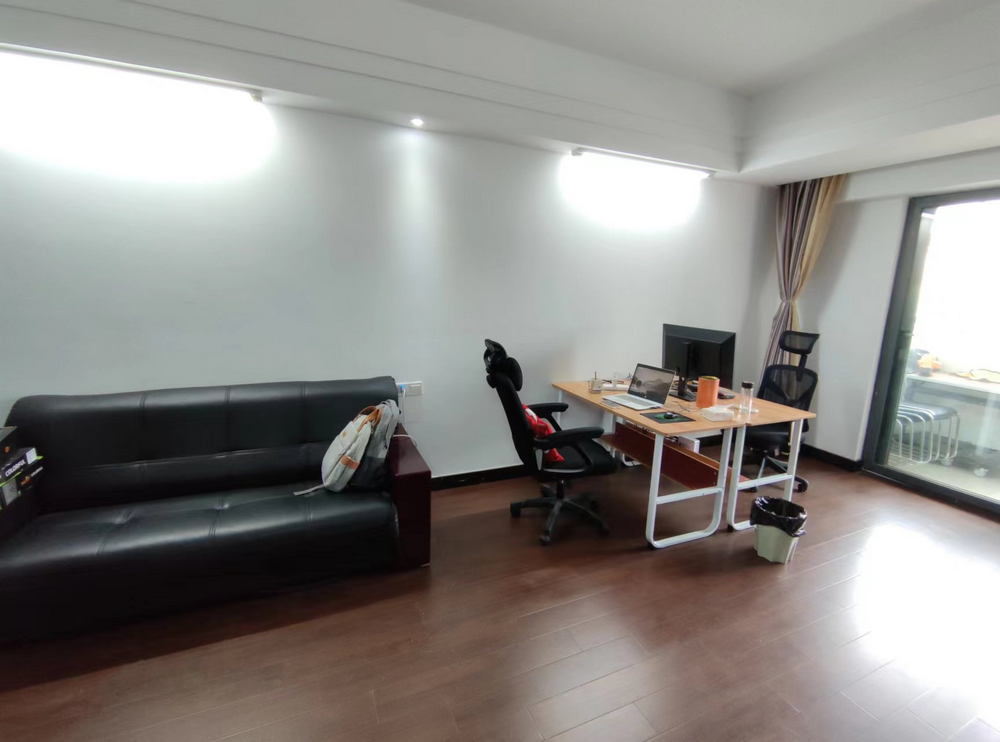
Above is the interior view of the office.
Why Choose Mobile Business Broadband
After comparing various options, I found that Mobile's business broadband offers the lowest prices among the three major carriers, along with the following service commitments:
- One static public IPv4 address
- Symmetric upload and download speeds
- Ability to apply for opening ports
80/443after filing - Monthly rebates varying by package, with a minimum of
50%
Package Selected by xiaoz
Below is the package price sent by the account manager at the time (prices may change over time; please verify with actual conditions):
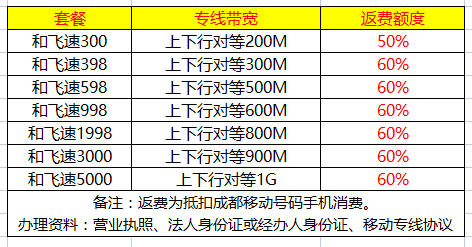
I selected the "Feisu 300" package (300 CNY/month), which includes:
- One default static IPv4
- Symmetric network speed of
200Mbps - Application for opening ports
80/443 - Monthly rebate of
50%(150 CNY)
Comprehensive calculation brings the cost to approximately 150 CNY/month, offering high cost-performance and suitability for office networks.
Required Materials
Mobile business broadband does not support individual applications; it must be applied for in the name of a company (individual businesses are also acceptable). I used an individual business license for the application and provided the following materials:
- Business license
- Legal representative's ID card
- Contact phone number
- Office address
- Official seal (for contract signing)
After submitting the documents, I was contacted a few days later to schedule an installation. No fees are charged for the installation month. For example, if installed on January 1st, January is free, and you only need to pay for February at the end of January.
About Rebates
Rebates are only supported for Chengdu Mobile numbers, with a maximum of 5 rebate phone numbers allowed. The account manager provides a form to fill in phone numbers, allowing you to customize the rebate amount for each number. For instance, with a 300 CNY broadband package and a 50% rebate (150 CNY), the total rebate amount assigned to phone numbers cannot exceed 150 CNY. If I added 3 phone numbers, their sum must equal 150 CNY.
- Phone Number A: Rebate 100 CNY
- Phone Number B: Rebate 30 CNY
- Phone Number C: Rebate 20 CNY
Rebates are processed on the 1st of each month for the previous month's consumption. For example, if Phone Number A consumed 50 CNY last month but was set for a 100 CNY rebate, only the actual consumption (50 CNY) will be refunded. If consumption exceeds the set rebate amount, the full set amount is refunded.
About Public IP
A static public IPv4 address is provided by default, so DDNS services are unnecessary. You can simply resolve your domain to the public IP and configure port forwarding on the router. If additional IP addresses are needed, they cost 50 CNY each. IPv6 is also supported at 50 CNY per address.
Opening Ports 80/443
Opening ports 80/443 was quite complicated, involving domain filing issues that took nearly three months to resolve, with several incidents along the way.
The domain filing entity must be in the company's name, not an individual or employee's name; otherwise, it will be rejected. Initially, I tried filing with a personal domain, but it was rejected after a month.
Furthermore, Mobile's filing process is outdated, still relying on physical backdrops and paper verification forms. Mobile sends a large, thick backdrop, which the website owner must use for a photo. After use, the backdrop must be returned, which is frustrating. In contrast, Alibaba Cloud and Tencent Cloud have already digitized their filing processes, making Mobile's approach seem very backward.
Additionally, Mobile's audit efficiency is low. Despite repeated follow-ups, the entire filing process took over two months. Once approved, ports 80/443 were opened, and the filed domain could be resolved to the IP for use.
IP Blocked
Shortly after opening ports 80/443, I noticed network anomalies:
- The static public IP could not be pinged
- All port mappings failed
- Ports
80/443became unavailable - The office could access the public internet (outbound), but external networks could not connect (inbound)
Contacting Mobile for support, I was informed that the IP was blocked and required further handling by the account manager. The results were:
- Reason: The IP was blocked due to an unregistered domain being resolved to the public IP.
- Solution: Sign a commitment letter and apply for unblocking with the official seal.
This reason was confusing because I had always resolved registered domains to the IP. Mobile eventually queried and found an unknown domain, which was completely unrelated to me.
This highlights a security risk: if the public IP is exposed, anyone could resolve an unregistered domain to Mobile's assigned IP, causing the IP to be blocked. Unlike cloud providers that automatically block unregistered domains via firewalls, Mobile's business broadband lacks this built-in firewall. Mobile technicians advised purchasing an enterprise firewall to implement network policies. Consequently, I had to manually configure a software firewall to implement a domain whitelist.
Finally, I signed a commitment letter with the official seal to apply for unblocking, and the IP is now fully restored.
Conclusion
Chengdu Mobile business broadband offers high cost-performance and is suitable for company networks. However, if you need to open ports 80/443, domain filing is required. The filing process is cumbersome and time-consuming. Ensure the domain filing entity matches the broadband entity; do not use an individual entity for filing.
Once ports 80/443 are opened, be extremely careful not to resolve unregistered domains to the IP, as this will cause the IP to be blocked. It is recommended to use a firewall to implement a domain whitelist to avoid unnecessary trouble.