Free Smart DNS Resolution: A Guide to DNSPod and Aliyun
With the original China Telecom Group splitting into regional entities, the new China Telecom and China Netcom groups were established, dividing the internet backbone into two parts: Netcom in the north and Telecom in the south. This split caused persistent connectivity issues between Telecom and Netcom. Smart DNS resolution is a DNS solution designed to address these interoperability problems.
Generally, if a website does not have high traffic, we rarely need the smart DNS resolution feature. However, it is worth introducing. Currently, major domestic DNS service providers, DNSPod and Aliyun DNS, both support free smart DNS resolution services.
The main function of smart DNS resolution is to direct Telecom users to Telecom lines and Unicom users to Unicom lines, thereby solving interoperability issues. However, most websites default to resolving to a single IP (with some exceptions for IPs with BGP effects), leading some users to report slow website loading times.
1. Using DNSPod
First, register a DNSPod account. This is mandatory.
After successful registration, add your own domain in the console. The following uses
yige.winas a demonstration.
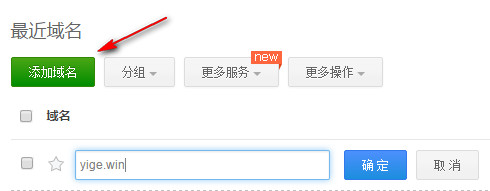
- After adding the domain, the work is not done. You need to change the DNS to DNSPod's DNS servers at your domain registrar:
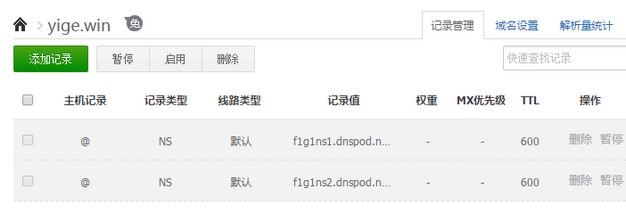
f1g1ns1.dnspod.net and f1g1ns2.dnspod.net
Then save the changes. For example, if my domain yige.win is registered with West Digital, I would modify the DNS servers there. Note that the location to modify DNS servers may differ depending on the registrar; contact your domain registrar for specifics.

- After saving, wait for DNSPod to detect that the changes have taken effect. You can then manage domain resolution operations within DNSPod.
2. Using Aliyun DNS
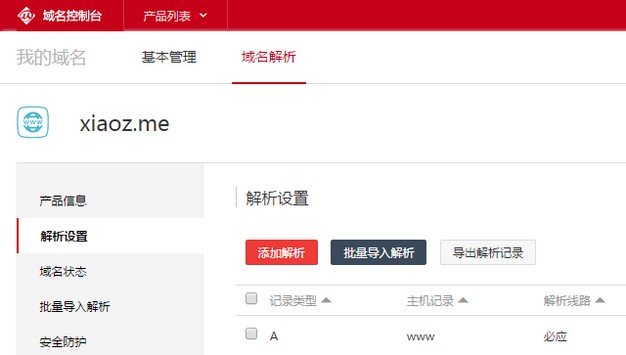
If your domain is registered with Aliyun, you are already using Aliyun DNS by default and do not need to perform any operations. If your domain is not registered with Aliyun, follow the same process as using DNSPod described above.
Summary
Typically, after registering a domain, the domain registrar provides default DNS servers for resolution. However, some small DNS service providers are extremely unstable, with slow propagation times and frequent resolution failures. If you are targeting users within China, I personally recommend using DNSPod or Aliyun DNS.
Additionally, both DNSPod and Aliyun DNS offer free and paid versions. Generally, the free version fully meets our needs. In terms of functionality, I feel DNSPod is slightly more powerful, as it has been specializing in DNS resolution from the start and offers more resolution lines than Aliyun DNS. In terms of stability, both are excellent; I have not encountered any failures with either provider.